What Common Issues Do Homeowners Encounter With Their Porcelain Flooring?
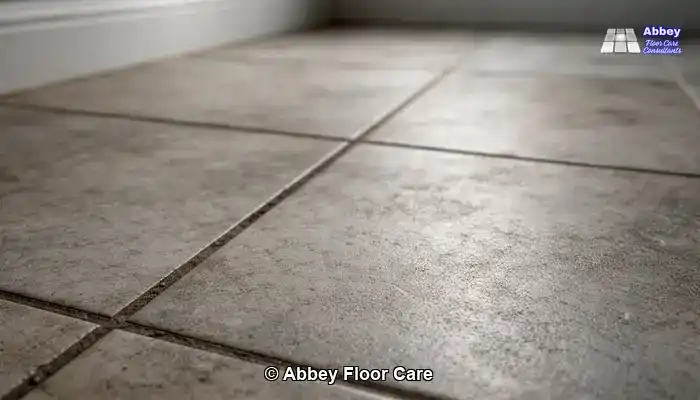
Within the domain of porcelain tile restoration in Surrey, many homeowners often express frustration when their porcelain tiles appear lacklustre or unclean despite rigorous cleaning attempts. This problem is especially evident on textured surfaces, where dirt and grime can become trapped in the intricate grooves and patterns, making effective removal challenging and adversely affecting the overall aesthetic appeal of the flooring. Addressing these concerns is vital for maintaining a spotless and inviting atmosphere within your home environment. Regular upkeep and professional assistance can help to alleviate these common problems.
Another widespread issue that homeowners face is the formation of a grey film after mopping. This occurrence typically arises from residual materials, such as grout haze or lingering cleaning agents, remaining on the tile surface rather than actual staining. Recognising this distinction is crucial for homeowners striving to achieve a genuinely clean and polished floor appearance. Identifying the root cause of this grey film can guide effective cleaning methods and enhance the longevity of your flooring.
Over time, grout lines frequently become discoloured, developing a dark and patchy appearance, which starkly contrasts with the surrounding tiles that retain their original hue. This discolouration happens because grout is significantly more porous than porcelain, allowing it to absorb contaminants more readily, leading to an uneven and unattractive look that detracts from the overall beauty of the flooring. Regular maintenance and professional cleaning can help mitigate this issue.
In areas featuring polished porcelain, it is common to notice faint swirls and a lack of clarity in the surface. These imperfections are often the result of minor scuffs that impact the factory finish without penetrating deeply into the tile itself. Homeowners should remain vigilant about these potential concerns to effectively preserve the pristine condition of their porcelain flooring and maintain its aesthetic appeal over time.
Why Does Porcelain React Differently Compared to Grout?

Porcelain tiles are fully vitrified, which grants them exceptional resistance to absorption; thus, most issues manifest as chemical films on the surface rather than penetrating the tile itself. This distinctive characteristic sets porcelain apart from other flooring materials and clarifies why it frequently appears cleaner compared to the surrounding grout.
In contrast, cement-based grout is inherently porous, allowing contaminants to infiltrate and progressively darken its surface. This fundamental difference explains why grout often appears in a significantly worse condition than the tiles themselves, prompting homeowners to focus their maintenance efforts on ensuring that their grout lines remain in excellent condition. Regular cleaning and sealing can help prolong the life of the grout and maintain its appearance.
In many kitchens and bathrooms across Surrey, hard water contributes to the accumulation of minerals that adhere to surfaces, resulting in chalky marks known as limescale deposits. This buildup can be visually unappealing and necessitates consistent cleaning to prevent it from evolving into a more significant issue. Understanding how hard water affects your flooring can help in implementing effective cleaning strategies.
Given that porcelain resists absorption, attempts to remove stains using harsh cleaners often lead to damage of the grout and surrounding joints instead of effectively eliminating the stain. This reality underscores the importance of understanding the distinct properties of both porcelain and grout when determining suitable cleaning methods to avoid unintentional damage. Homeowners should consult professionals for the best cleaning practices tailored to their flooring.
When Should You Seek Professional Deep Cleaning, and What Are Its Limitations?
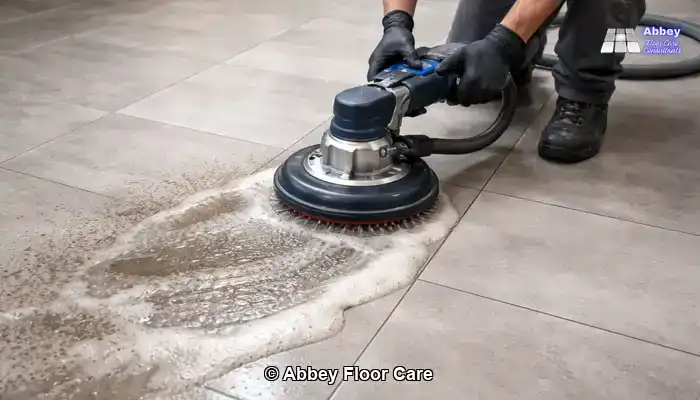
When residues, haze, or dirt accumulate on the floor’s surface over time, engaging in a professional deep clean becomes essential. This meticulously controlled chemical-mechanical process utilises specialised products and agitation techniques to effectively dissolve unwanted films while preserving the integrity of the porcelain tiles. Homeowners should consider this option when regular cleaning fails to restore the desired shine.
Typically, alkaline solutions are employed to break down grease and soil resulting from foot traffic, as alkaline cleaners effectively target organic buildup without harming the porcelain surface. This focused approach ensures that the cleaning process remains efficient while safeguarding the quality of your flooring. Regular deep cleaning can significantly enhance the longevity of your tiles.
In the next phase, acidic solutions are carefully applied to eliminate mineral films and grout residues, often through an acid wash. This step is critical for achieving comprehensive cleanliness, yet it must be executed with caution to avoid any damage to the tiles. Understanding the correct application of these solutions is essential for effective results.
Following agitation, it is crucial to thoroughly remove the slurry through effective slurry extraction. If residues are not completely eradicated, they can dry back onto the floor, resulting in a return of the haze and diminishing the effectiveness of the deep cleaning process. Proper extraction techniques are vital for achieving optimal results.
Nevertheless, it is crucial to recognise that even the most proficient deep cleaning cannot reverse bleached grout or repair wear within grout joints, as these issues stem from within the grout itself rather than the tile surface. Consequently, understanding the limitations of deep cleaning is a key consideration for homeowners when planning their maintenance strategy.
When Is Grout Recolouring or Joint Renovation the Most Effective Solution?
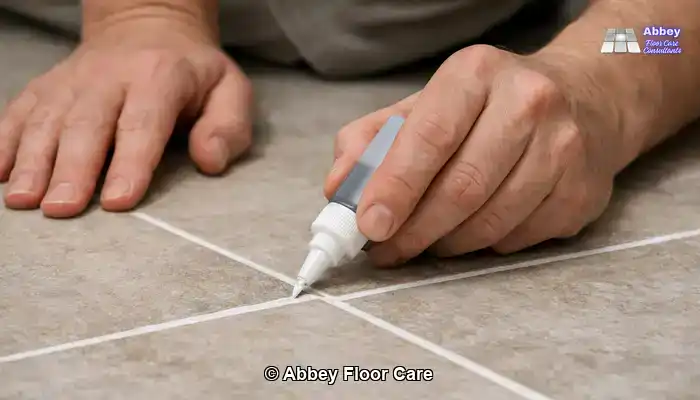
When grout lines have become faded, stained, or developed uneven coloration, the most effective cosmetic enhancement is often accomplished through grout recolouring. This method should be conducted following thorough preparation to ensure that the surface is clean and ready for the application of the new colour. This process can significantly enhance the overall aesthetic of your flooring.
During the recolouring procedure, a stable colour coating is meticulously applied across the grout joints, restoring a uniform shade while providing added protection against future soiling and discolouration. This dual advantage makes grout recolouring an attractive option for homeowners looking to elevate the aesthetics of their flooring. It can breathe new life into tired-looking grout lines.
While recolouring greatly enhances the visual appeal of the grout, it does not physically reinforce weakened grout joints. The structural integrity of the grout remains unchanged, indicating that local repairs or complete replacement may be necessary in areas where joints are cracked, missing, or otherwise compromised. Regular inspections can help identify these issues early.
When Should You Consider Burnishing a Polished Porcelain Floor?
For installations featuring polished porcelain, burnishing serves as an effective technique for enhancing the surface. This process employs ultra-fine abrasives to restore clarity in the polished porcelain, thereby improving its overall aesthetic and visual appeal. Homeowners may wish to consider this technique as part of their maintenance routine.
Burnishing operates by smoothing out microscratches using a high-quality burnishing pad, rather than grinding away material as one might do with natural stone. This method offers a gentle yet effective approach to maintaining the shine of the floor without compromising its integrity. It is essential to choose the right tools for this task.
While burnishing can significantly enhance reflection and uniformity across the surface, it is crucial to understand that it will not restore a previously damaged factory finish if the original surface has already been compromised. Homeowners should take this limitation into account when developing their floor maintenance strategy. Regular burnishing can help preserve the polished appearance.
Before undertaking any burnishing work, conducting tests on small areas can help ascertain whether the burnishing process yields sufficient improvement to justify the investment. This precaution ensures that homeowners can make well-informed decisions regarding their flooring upkeep and maintenance.
When Is Tile Replacement the Only Viable Solution for Damaged Tiles?
In scenarios where tiles are chipped or cracked, the only truly effective remedy is tile replacement, provided that spare tiles are accessible. This approach typically represents the best means of restoring the flooring’s integrity and ensuring a seamless appearance. Homeowners should consider this option when damage is beyond repair.
Attempts to repair the porcelain bodies convincingly are usually unsuccessful, as any filler or coating tends to settle on the surface, creating a stark contrast with the surrounding porcelain tiles. This lack of cohesion makes replacement the most sensible option for repairs that ensure the aesthetics of the floor are maintained.
The replacement procedure must be executed with utmost care to prevent damaging adjacent tiles and safeguarding any underlying systems, such as underfloor heating (UFH), that may exist beneath the flooring. Understanding the complexities involved in the removal process is essential for ensuring a successful replacement that does not compromise the rest of the flooring.
This decision should always follow a thorough inspection, as the feasibility of tile removal can depend on factors such as adhesive strength, the availability of matching tiles, and the condition of the surrounding grout lines. Professional assessments can provide clarity on the best approach to take.
Where Is Sealing Recommended for Porcelain Tiles?
Most porcelain tiles do not require sealing, as they are inherently non-porous. Applying a sealing coating often results in a surface film that detracts from the natural beauty of the tiles. This misconception can lead to unnecessary complications regarding maintenance and care for your flooring.
However, there are legitimate exceptions, particularly with micro-porous porcelain, where targeted sealing can effectively slow down staining and simplify maintenance. This approach should be considered in specific circumstances where it is warranted to enhance the longevity of the tiles and maintain their appearance.
In high-traffic areas, textured porcelain may occasionally benefit from protective sealing, although each case must be evaluated individually through porosity testing to ascertain whether sealing is indeed necessary. A tailored approach ensures that your flooring receives the care it requires.
When sealing is deemed appropriate, an impregnating sealer is typically recommended, as it provides protection without altering the appearance of the flooring. This careful selection ensures that the beauty of the tiles remains intact while helping to prevent staining.
How Does a Specialist Evaluate Your Floor Before Recommending Solutions?
The evaluation process commences with a comprehensive understanding of the type of tile, the age of the installation, and the usage patterns within the household. This information allows us to tailor our approach to the specific porcelain tiles in question, ensuring the most effective solutions are implemented based on individual requirements and conditions.
We also conduct meticulous inspections of the grout lines, as the long-term aesthetics of the floor often rely more on the grout than on the tiles themselves. This thorough evaluation provides a holistic perspective on the overall condition of the flooring and highlights areas that may require special attention.
Conducting test patches enables us to observe how residues respond to various cleaning agents. This step confirms whether an alkaline cleaner or an acidic solution is necessary and identifies areas where it may not be safe to apply either method. This informed approach ensures that the cleaning process is effective and safe.
In situations where gloss recovery is being considered, controlled trials employing a burnishing pad demonstrate the potential level of improvement before any commitment is made. This ensures that homeowners have clear expectations moving forward regarding their floor maintenance and the results that can be achieved.
What Guarantees Are Not Provided Without a Floor Inspection?
I cannot guarantee a “like-new” result for grout, as the outcome relies heavily on the initial condition of the grout itself, not solely on the cleaning methods employed. This transparency is vital for effectively managing client expectations and ensuring satisfaction with the results.
I will also refrain from recommending sealing as a default action, since unnecessary coatings can create sealer residue that is both challenging and costly to remove. This cautious approach helps to prevent potential complications down the line and ensures that homeowners are well-informed about the best practices for their flooring.
I cannot assure that burnishing will completely restore the original finish, as this process only refines the existing factory finish and cannot recover what has been lost. Homeowners should maintain this realistic perspective when evaluating their options and considering maintenance strategies.
Lastly, I will not provide cost estimates without a comprehensive inspection, as each decision depends on factors such as the types of materials, contamination levels, and the overall condition of the porcelain tiles. This meticulous approach guarantees accuracy and fairness in our assessments, ensuring that homeowners receive tailored solutions.
Essential Maintenance Strategies to Maximise Results After Restoration
Routine cleaning should ideally involve a pH-neutral cleaner to prevent residue buildup and avoid damaging grout lines with harsh chemicals. This approach is fundamental for maintaining the longevity and visual appeal of your flooring, ensuring that it remains beautiful for years to come.
Avoiding steam, bleach, or heavy detergents is advisable, as these substances can accelerate fading and weaken the grout over time, even when the tiles themselves appear unaffected. Protecting your flooring from these harmful agents is crucial for its preservation and the maintenance of its aesthetic value.
In homes affected by hard water, regularly wiping down wet areas can significantly reduce the development of limescale deposits before they harden on surfaces. This proactive measure can save considerable time and effort in the long run, helping homeowners maintain a clean and inviting atmosphere.
When dirt reappears quickly, it often indicates that the floor requires professional slurry extraction rather than stronger household cleaning products. Recognising these signs can guide homeowners towards more effective and sustainable maintenance solutions, ensuring that their flooring remains in optimal condition.
What Steps Should You Take If You’re Unsure About Needing a Specialist?
If you are uncertain whether the issues you are experiencing stem from residue, aging grout, or surface scuffing, the wisest course of action is to engage in a calm, inspection-led discussion with a porcelain specialist. This dialogue can clarify your concerns and steer you toward the most effective approach for your flooring maintenance.
Our responsibility is to provide insightful information regarding what is suitable for your flooring, what cannot be achieved, and how an assessment can help avert further issues in your home. This is a vital component of maintaining a healthy living environment and ensuring your flooring remains beautiful and functional.
If you would like to schedule a professional assessment of your porcelain floor in Surrey, I would be delighted to arrange a straightforward evaluation. This service will clarify what is realistic in terms of maintenance and restoration, ensuring you are well-informed as you move forward with your flooring care.
The Article: Do You Really Need a Specialist for Porcelain Tile Restoration in Surrey? First found on https://www.abbeyfloorcare.co.uk
The Article Porcelain Tile Restoration in Surrey: Is a Specialist Necessary? appeared first on https://fabritec.org
The Article Porcelain Tile Restoration: Do You Need a Specialist in Surrey? Was Found On https://limitsofstrategy.com
The Article Porcelain Tile Restoration Specialists in Surrey: Do You Need One? found first on https://electroquench.com