
Last Updated on December 17, 2025, by David
Understanding the Underlying Causes of Blackening in Travertine Grout and Effective Strategies for Prevention: Investing in Travertine flooring signifies a commitment to sophistication and elegance. However, many homeowners might notice that grout lines are turning black, which detracts from the overall appearance of their floors. It is a common misconception among residents in Surrey that this issue arises from mere dirt accumulation; however, the reality is far more complex. The blackening often stems from a buildup of soapy residue resulting from regular cleaning practices. These residues can act like magnets, attracting soil and encouraging mildew growth within the pores of the grout, particularly in humid conditions.
Essential Products for Daily Maintenance of Your Travertine Flooring
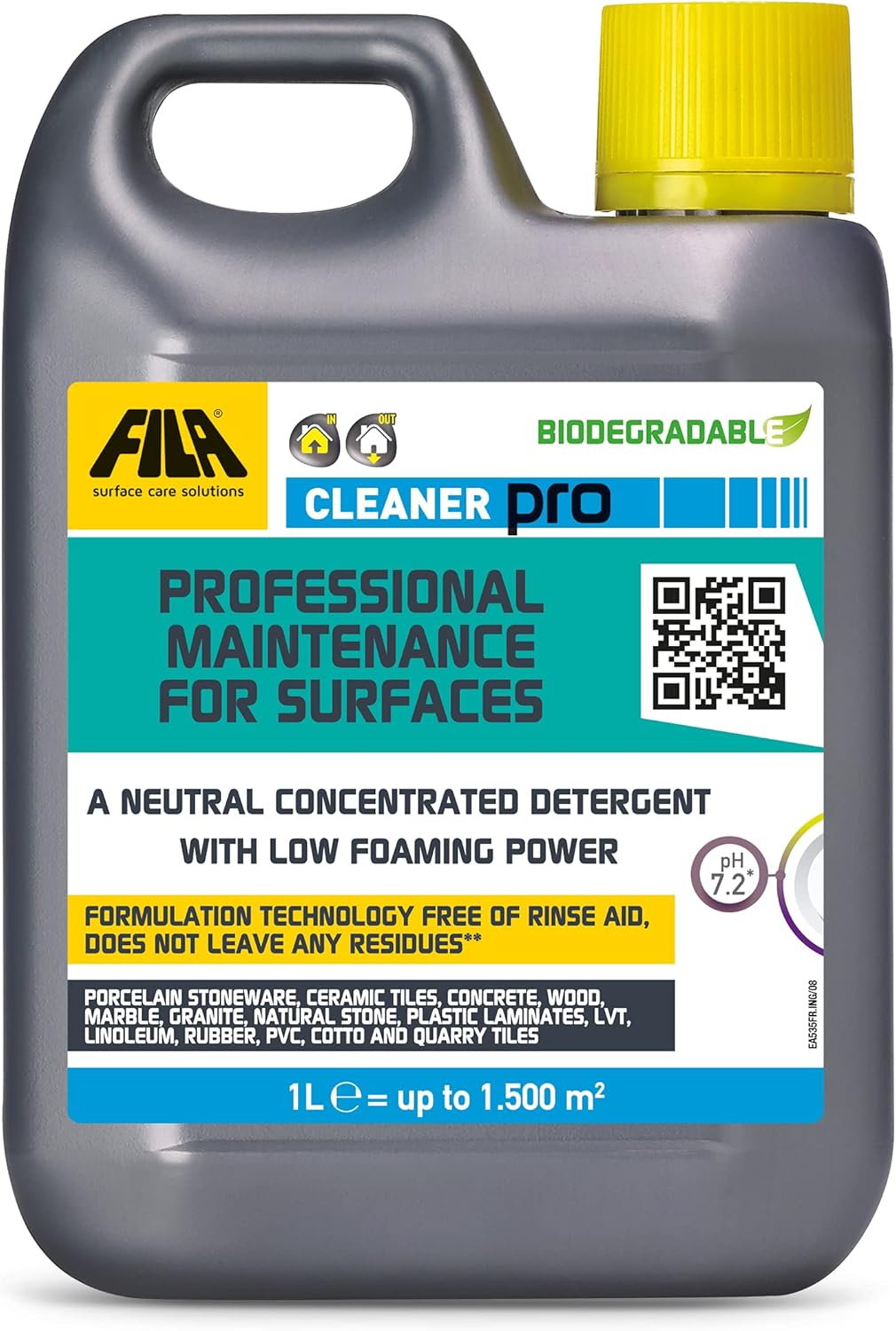
Fila Pro Floor Cleaner
|
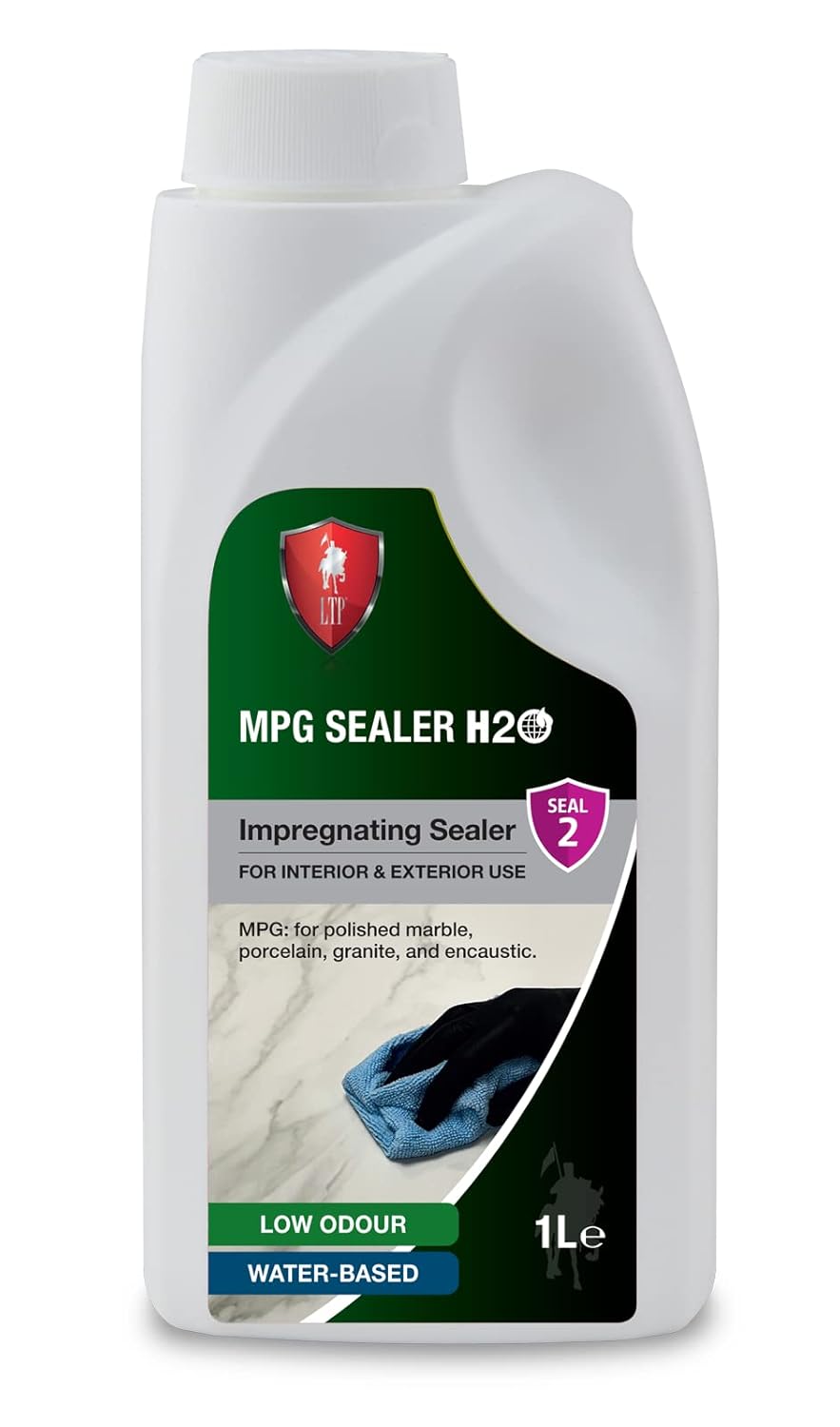
LTP MPG Sealer H20
|

Vileda H2PrO Spin Mop System
|
The positive aspect is that this problem is not irreversible. With expert deep cleaning to restore the original appearance of the grout lines, alongside long-lasting grout sealing, you can effectively break the cycle of staining and protect your Travertine floors for many years to come. This comprehensive guide explores the root causes of blackening, explains why DIY methods often fall short, and details how specialised care can provide the lasting solution you have been seeking.
Identifying the Key Factors Contributing to Blackened Travertine Grout

The Detrimental Effects of Soapy Residue on Grout Appearance
Whenever you mop or clean your Travertine floors, the cleaning solution typically leaves behind a thin layer of residue. Over time, this soapy residue accumulates within the porous grout lines. Rather than promoting cleanliness, it creates a sticky surface that attracts dust, grease, and everyday debris. This explains why your grout appears darker even when you adhere to a regular cleaning routine, and why blackened grout lines consistently return despite your best efforts. Understanding this accumulation is crucial to maintaining your floors.
How Soil and Mildew Adhere to Grout Surfaces
The porous nature of grout means it readily absorbs moisture and particles. Once residues are present, soil and mildew spores tend to cling to it. In homes throughout Surrey, where floors experience daily foot traffic, this cycle of contamination can escalate rapidly. What begins as a minor dullness can soon develop into mildew-affected grout that detracts from the overall beauty of your Travertine installation. Recognising these factors is essential for maintaining the aesthetic of your flooring.
Why Do Traditional Cleaning Methods Fail to Resolve the Issue?
Many homeowners resort to scrubbing harder or using stronger cleaning solutions in a bid to address the problem. Unfortunately, this often worsens the situation. The use of harsh chemicals can etch the surface of Travertine stone, while repeated superficial cleaning does not address the deep-rooted contamination within the grout. Without professional grout cleaning and a comprehensive sealing strategy, the blackening will inevitably recur. It is important to understand the limitations of these methods to achieve lasting results.
Recognising Areas at High Risk for Mildew Growth in Travertine Grout

Humidity-Prone Areas: Bathrooms and Showers
These spaces often experience prolonged periods of humidity, elevated temperatures, and frequent water exposure. The porous structure of Travertine grout allows moisture to become trapped within the grout lines, establishing a perfect breeding ground for mildew spores to thrive. Understanding these environments is essential for effective cleaning and maintenance.
Vulnerable Locations: Wet Rooms and Utility Spaces
Constant moisture and limited ventilation make these areas especially prone to staining. Grout staining in these environments is often linked to microbial activity instead of merely surface soil accumulation. Knowing where these high-risk areas are situated can help you take preventive measures.
Common Areas: Kitchens and Living Rooms
While spills and soapy residue can contribute to darkened grout, the reduced humidity levels and quicker drying times in these areas lessen the likelihood of significant grout discolouration. Thus, while mildew growth is less common than in bathrooms, staining from soil and residues can still occur. Awareness of these factors is crucial for maintaining your flooring’s appearance.
Low Microbial Activity: Hallways and Dining Areas
These regions may show soil staining or residue accumulation, but they generally do not exhibit the same level of microbial activity as wetter areas. The darkening in these spaces is primarily cosmetic, rather than indicative of biological contamination. This understanding can guide your cleaning efforts effectively.
Clarifying Grout Discolouration Issues in Different Areas
The blackening of kitchen grout typically results from soapy residue attracting soil, rather than active mildew growth. Conversely, areas such as bathrooms and showers face a combination of humidity, residue, and moisture retention, which elevates the risk of mildew significantly. Recognising these differences can aid in more effective cleaning strategies.
The Dangers of DIY Cleaning on Travertine Floors

Investigating the Risks of Harsh Chemicals and Potential Permanent Damage
In their quest to eliminate blackened grout lines, many homeowners resort to stronger cleaning products. Unfortunately, these harsh chemicals can etch and weaken Travertine stone, leading to dull patches or irreversible damage. What may seem like a quick fix often results in long-lasting harm to the natural surface of your floors. Understanding these risks is crucial to preserving your investment.
The Hazards of Steam Cleaners and Moisture Accumulation
Steam cleaning is frequently marketed as a safe method; however, for Travertine grout, it can be harmful. The high temperatures push moisture deep into the porous grout, creating an environment conducive to mildew growth. Instead of effectively resolving the problem, steam cleaning often exacerbates staining and darkening. Recognising this can help homeowners avoid potential pitfalls.
DIY sealers found in hardware stores may claim to offer protection but frequently fail to adhere properly to natural stone grout. Many leave a sticky residue that attracts more soil. In homes across Surrey, this commonly results in stained grout that appears worse than before, leaving homeowners feeling disheartened after dedicating time and resources. This understanding is essential for choosing the right maintenance approach.
The Importance of Professional Deep Cleaning for Travertine Grout
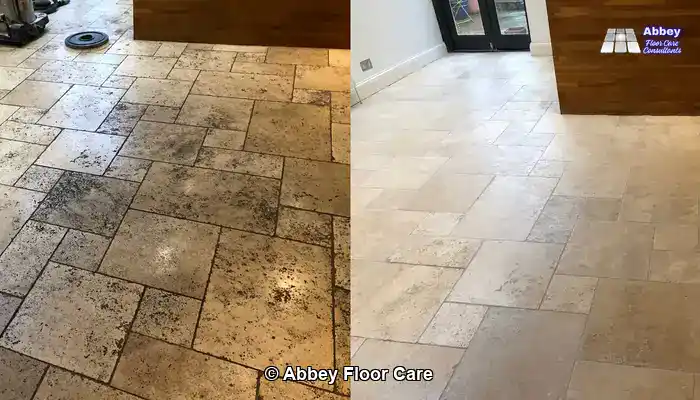
“We believed the grout was irreparable — but Abbey Floor Care restored it to pristine condition.”
Restoring Grout Lines to Their Original Luster and Colour
When Travertine grout has discoloured to black, mere surface cleaning is inadequate. Professional deep cleaning utilises specialised equipment to remove contaminants embedded within the grout pores. This thorough process rejuvenates grout lines to their original lighter colour, thereby enhancing the overall beauty of your floors. Understanding this process can significantly improve the longevity of your flooring.
Employing Safe Techniques for Natural Stone Maintenance
As a delicate material, Travertine requires careful cleaning methods. Skilled technicians employ stone-safe cleaning solutions and controlled techniques that prevent any etching or damage to the surface. Unlike DIY methods, professional cleaning respects the natural makeup of Travertine stone while ensuring thorough and effective results. This professional approach is vital for maintaining the integrity of your floors.
Demonstrating Transformative Results Through Professional Care
One of the most reassuring aspects of professional cleaning is the remarkable transformation it can achieve. Homeowners in Surrey frequently observe dramatic changes after blackened grout lines are revitalised. Before-and-after photos vividly showcase the differences, helping restore pride and confidence in the aesthetics of your home. Recognising the value of these services can enhance your overall flooring experience.
Implementing Long-Term Grout Sealing for Lasting Protection

Preventing Future Staining with Effective Grout Sealing
Once Travertine grout has been professionally cleaned, the next crucial step is sealing. A high-quality grout sealer penetrates the pores and forms a protective barrier. This barrier effectively repels liquids, oils, and residues, preventing them from penetrating and causing blackened grout lines again. Understanding the importance of sealing can greatly extend the life of your flooring.
The Science Behind Protection and Repellency in Grout Sealers
Modern grout-sealing technology adheres at the microscopic level to the grout surface. Instead of forming a film, it creates an invisible shield that protects against soil and mildew spores. This innovation makes routine cleaning easier and prevents stains before they can take hold. Knowledge of this technology is essential for selecting the right products for your floors.
Providing Assurance with Professional Sealing Guarantees
For homeowners in Surrey, sealing offers more than just a protective layer; it provides peace of mind that your Travertine floors will maintain their beauty for years to come. Professional services often come with guarantees, instilling confidence that your investment in long-term grout sealing will yield enduring results and reassurance. This assurance is invaluable for those looking to protect their investments.
Exploring Why Surrey Homeowners Rely on Specialists for Travertine Care
Safeguarding Valuable Properties with Expert Knowledge
For residents in Surrey, Travertine floors are more than just flooring; they significantly enhance the prestige and long-term value of a property. Choosing a specialist guarantees that natural stone grout receives the right treatment, preventing damage and preserving the home’s aesthetic appeal for years to come. Understanding this can guide homeowners in making informed maintenance choices.
Experiencing Convenience with Minimal Disruption During Services
Professional services are designed to suit your lifestyle. Experienced teams work efficiently, ensuring your home remains tidy and organised. This means that grout cleaning and sealing can be performed with minimal disruption, allowing you to experience peace of mind and a seamless process. This convenience can greatly enhance your overall satisfaction.
Building Trust Through Reputable Service and Proven Results
Homeowners in Surrey often prefer companies with solid reputations. Specialists in Travertine restoration provide guarantees, transparent communication, and visible before-and-after results. This builds trust and reassures you that your investment in grout sealing will provide lasting protection. Knowledge of your service provider’s reputation is essential for peace of mind.
Addressing Frequently Asked Questions About Travertine Grout Care
How frequently should grout be resealed to ensure optimal protection?
In Surrey homes, Travertine grout usually benefits from resealing every 2 to 4 years. The timing can vary based on factors like foot traffic, cleaning habits, and moisture exposure. Regular inspections can help ascertain when grout sealing is due. This knowledge is essential for maintaining the longevity of your floors.
Can sealing alter the colour of the grout?
High-quality grout sealers are formulated to remain invisible. They protect without altering the natural shade. If you wish for a colour enhancement, specialist products can be utilised, but standard grout sealing will maintain the current hue. Understanding the options available can help you achieve your desired aesthetic.
What distinguishes Travertine from other types of stone?
Travertine stone is porous and often filled during installation, making its grout lines more vulnerable to staining compared to denser materials such as granite. Understanding this difference is essential for selecting suitable professional cleaning and sealing strategies. This knowledge empowers homeowners to make informed decisions regarding their flooring.
Why does grout continue to turn black despite regular cleaning practices?
Daily cleaning typically leaves behind soapy residue that attracts dirt and mildew spores. This residue builds up within the grout pores, leading to darkening that regular scrubbing cannot resolve.
Is DIY grout cleaning safe for Travertine floors?
DIY methods often involve harsh chemicals or steam cleaners that can damage Travertine stone. These techniques rarely address the underlying problems and may cause permanent etching or moisture entrapment within the grout. Understanding these risks is crucial for effective maintenance.
What advantages does professional sealing provide?
Professional grout sealing creates an invisible barrier that repels liquids, oils, and residues. This prevents blackened grout lines from returning while simplifying routine cleaning efforts. Recognising these benefits can help homeowners make informed choices about their flooring maintenance.
How can I maintain the cleanliness of Travertine grout after sealing it?
Utilise stone-safe cleaning products and avoid harsh chemicals. Regular light cleaning helps remove surface dirt while the sealed grout prevents deep staining. This combination ensures your floors remain immaculate for years to come. Understanding these practices can greatly enhance the longevity of your flooring.
Revealing the Sustainable Solution for Travertine Grout in Surrey Homes
Blackened Travertine grout lines signify more than just an aesthetic issue. They indicate deep-seated contamination from soapy residue, soil, and mildew spores trapped within the grout pores. Routine cleaning alone cannot rectify this problem, and DIY methods often risk damaging your valuable Travertine stone.
The enduring resolution involves a two-pronged approach: firstly, employing professional deep cleaning to restore the grout lines to their original colour, followed by long-term grout sealing to prevent future discolouration. This dual strategy not only rejuvenates the charm of your floors but also protects them for years to come. Understanding this approach is essential for maintaining the beauty and durability of your investment.
For homeowners in Surrey who value elegance, convenience, and peace of mind, collaborating with a trusted specialist ensures that your Travertine floors continue to be a source of pride. With expert care, guarantees, and proven outcomes, you can enjoy a home that looks flawless and remains safeguarded against the frustration of blackened grout.
The article Why Travertine Grout Turns Black And How To Stop It Permanently was first published on https://www.abbeyfloorcare.co.uk
The article Why Travertine Grout Turns Black And How To Stop It Permanently appeared first on https://fabritec.org
The Article Travertine Grout Turns Black: Causes and Permanent Solutions Was Found On https://limitsofstrategy.com
The Article Travertine Grout Turns Black: Causes and Lasting Remedies found first on https://electroquench.com